Russian Experts Split on EU’s New Crypto Sanctions: Adapt or Isolate?
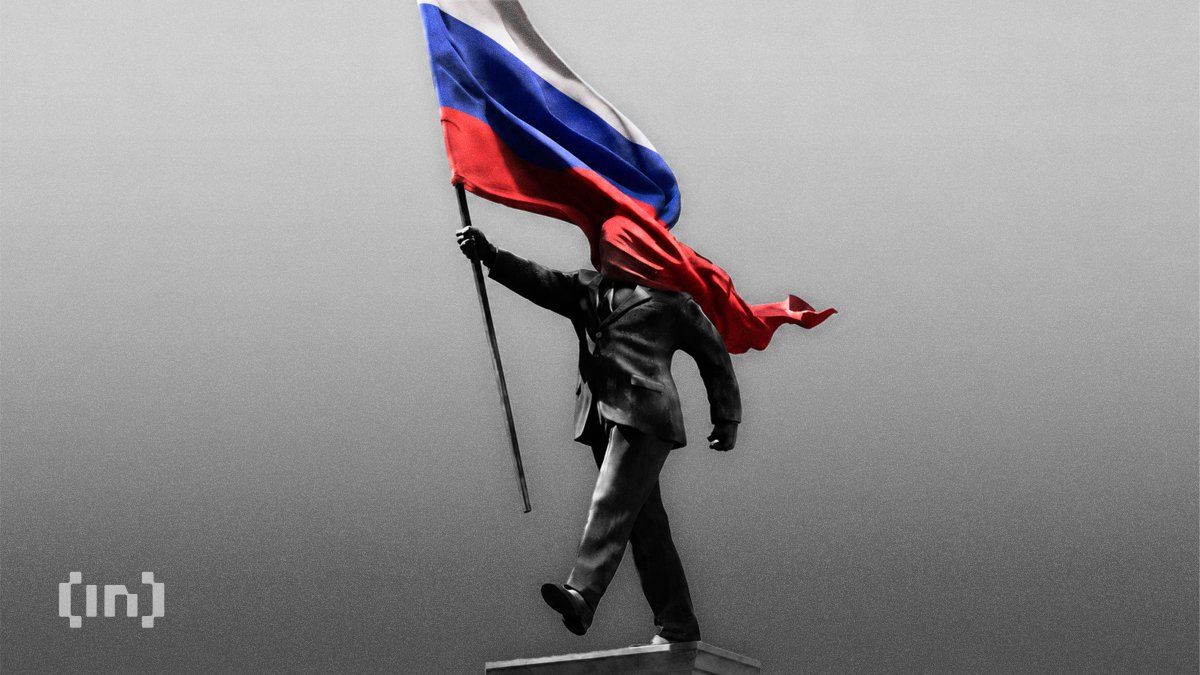
The EU just hit Russia’s crypto harder than ever before. Six Russian experts told BeInCrypto the blow is real, but not deadly. They cannot agree on what comes next.
The new sanctions target 14 crypto platforms in other countries. They also hit 94 Russian banks and the Moscow Exchange. And for the first time, the EU can ban any foreign crypto service that helps Russia dodge the rules.
One Group Says the Market Will Cope
Anton Tkachev, a senior Russian lawmaker, has seen this before. Sanctions are normal now, he says. Firms just plan around them. Blocked sites get replaced fast.
He points to Garantex. Police seized the Russian exchange in early 2025. Within days, its team relaunched it as Grinex. And copycat platforms keep appearing.
First-timers still feel it. Wallets get flagged. Transfers abroad raise questions. Users must prove where their money came from. But Tkachev calls this an operational inconvenience, nothing worse. He points to a “hardening effect” that makes Russian teams sharper.
Nadezhda Surova, a Russian digital-economy adviser, agrees the market can cope. It is “demonstrating resilience to sanctions pressure,” she says, after adapting to 20 earlier rounds.
After the EU’s earlier sector-wide ban, she expects trading to move elsewhere. That means decentralized apps, peer-to-peer deals, and stablecoins.
It also flows to friendly countries. Kyrgyzstan is a good example. It had 126 licensed crypto firms and $4.2 billion in volume by late 2024, according to TRM.
Dmitry Zuev, a crypto executive at NGE Farm, says it is “premature to draw conclusions” this early. He thinks the pain will hit cross-border payments most. For normal companies, he adds, Russia’s new crypto law matters more than these sanctions.
The Other Group Sees Isolation
Maria Agranovskaya, a Russian crypto lawyer, is more worried. She calls this the first big, direct strike on Russian crypto. Her verdict is “critical, but not fatal” for now. The EU’s first crypto penalty came last year, on a ruble-backed coin. This time it goes much further.
She says the new rules threaten platforms Russians use in Kyrgyzstan, the UAE, and Georgia. The result, she warns, is isolation and a growing “gray” market. She quotes former minister Andrey Nechayev, who sees a “closed crypto market within the Russian Federation.”
The squeeze is already showing. One ruble-backed coin, A7A5, saw daily transfers crash from over $1.5 billion to about $500 million after sanctions, Elliptic found. A big exchange, Uniswap, blocked the coin. Some traders even had accounts frozen when their funds were linked to it.
Alexey Zyuzin, who heads a Russian crypto-industry group, thinks the market will split in two.
“Two circuits are likely to form. The first is a legal domestic market under the control of the Russian regulator… The second is a cross-border segment, where elevated sanctions and technological risks will persist.”
The most exposed, he says, are firms that rely on foreign payments.
Nikolai Zagvozdkin, a crypto lead at Russian media group RBC, says the full target list is not out yet. Still, he sees a clear signal. Europe now treats crypto as key to Russia’s trade. Exchanges will check harder, with more freezes and refusals.
“Working with crypto will become more expensive, slower, and somewhat less transparent.”
What Will Decide the Damage
Everyone agrees on one thing. It all depends on who the EU actually targets. The full list is not public yet. Early counts put it near 10 or 11 platforms. If the rules touch every service used by Russians, the pain spreads wide. If they stop at sanctioned banks and known evaders, the market adapts. It has done so before, just within tighter limits.
Source: BeInCrypto
Новости в мире криптовалют



Случайная цитата о деньгах
"Сперва расплатись, а потом уже падай в обморок."
Интересные записи в других разделах блога










* для поиска по базе прокси просто вводите название страны, например: Россия, США, Таиланд